Some of the Japanese Instruments

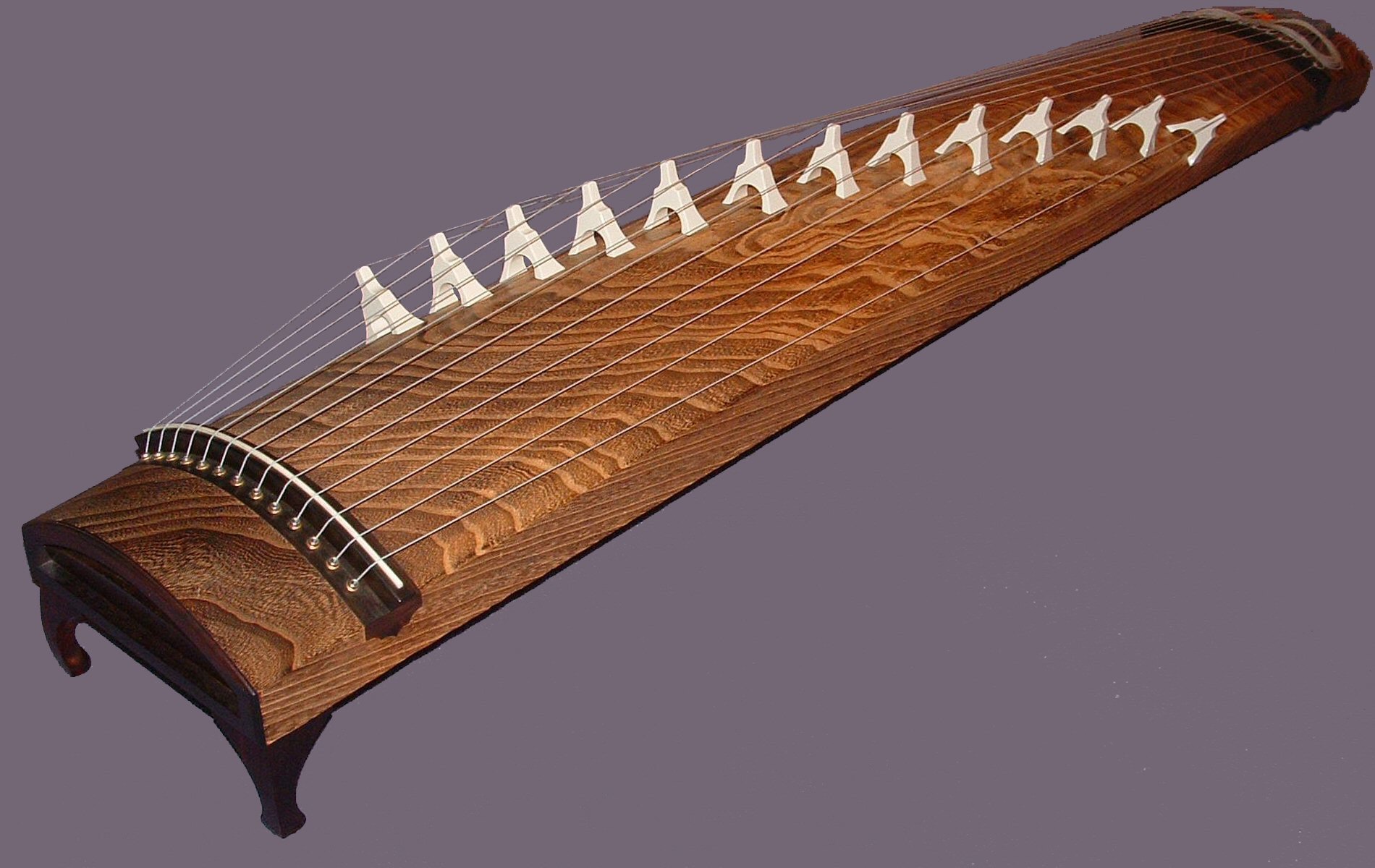
1.Japanese Koto - is one of the most important stringed instruments. The instrument is aprroximately 6ft. long, 13 inches wide, and 2 inches thick. It has 13 strings, which extend the length of the body and are tuned to the pentatonic scale made by movable bridges between the body of the instrument and the strings. The instrument is played with plectrums which are attached to the right-hand thumb, index and middle fingers.


Japanese Shakuhachi - is an end blown bamboo flute. The common size is 1.8 Japanese feet in length. It produce a delicate tone and a light texture which characterizes Japanese music. There are usually 5 finger holes. The 4 holes on the front of the instrument are numbered from the bottom, 1st hole, 2nd hole, 3rd hole and 4th hole. The 5th hole is on the back of the instrument.


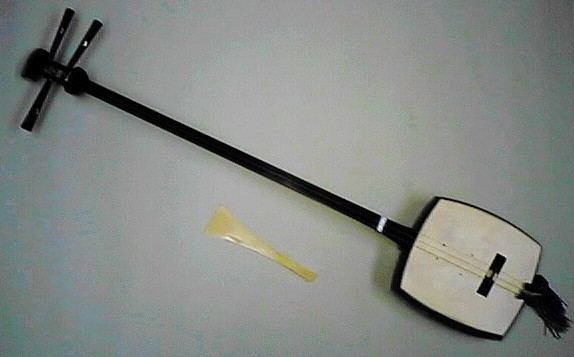
3. Shamisen - is a remodelled version of  the snake-skin covered stringed instrument. Nowadays, it is already covered with either dog and cat skin since snake skin is hard to get in Japan. The Shamisen became an indispensable part of the kabuki and of almost all music in the entire period. There are 3 basic tunings, 1st there is honchoshi or ''main tuning'' with the 2nd string tuned a 4th above the 1st string and 3rd string an octave above.

Some of the Chinese Instruments

1. Chinese Cheng - is a plucked stringed instrument. It may have 13 - 17 strings which are tuned to a pentatonic scale.


2. Hsiao - is a wind instrument made from bamboo. The performer blows air at the notch at the upper end to produce sounds. There are no keys on the instruments.


3. Chinese Sheng - consists of a bowl-shaped into which are inserted bamboo reed pipes, each designed to produce a different pitch. Within each pipe is a small reed, which vibrates to produce the sound as air moves through the pipe.

4. Chinese Pipa - is a plucked stringed instrument somewhat similar in shape to the Western guitar. The strings are plucked with the fingernails of the right hand.


5. Chinese  Erhu - is a kind of violin ( fiddle ) with 2 strings. The sound body is a drum-like little case usually made of ebony or sandal wood or snakeskin. It usually has a hexagonal shape with the length of approximately 13 cm. The back is left open. The neck is about 81 cm long. The 2 strings are usually tuned D and A.

Asian Music

  Among the largest and smallest countries of Asia are China and Japan. These countries have rich historical traditions and have made major contributions to the world. The Chinese invented paper and printing and have given to the world, silk,porcelain and compass. On the other hand, Japanese have increasingly demonstrated their computer-age technological accomplishments in electronic and manufacturing industries.


 The emphasis on simplicity of lifestyle is evident in Chinese and Japanese arts as well as music. One of the most persistent themes in the arts of China and Japan is nature. The religions of Taoism and Shintoism stressed the importance of man in communion with na
ture.


Some General Characteristics of Chinese and Japanese Music :
1. Melody - there is much use of pentatonic scales although 6-tone and 7-tone scales occur.
2. Rhythm - is predominantly in duple meter
3. Texture - Monophonic (one line) and heterophonic (simultaneous variations on single line) textures occur      frequently.
4. Dynamics - most of their performances are intented for small ensembles: thus, general dynamic levels tend to be soft.
5. Timbre - there is a variety of instrumental tone colors. Stringed, percussion and wind instruments are present, but stringed instruments predominate. The tone quality of singers often has a pinched,nasalized quality.